

logo
Wyślij wiadomość
Dom Aktualności

Case Hardness Depth to ISO 2639

Orzecznictwo
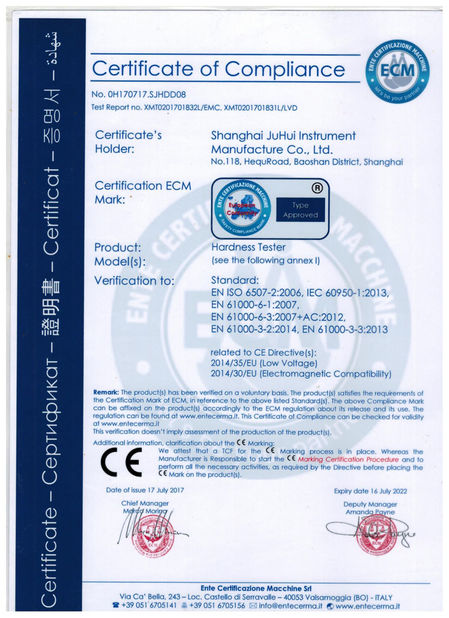
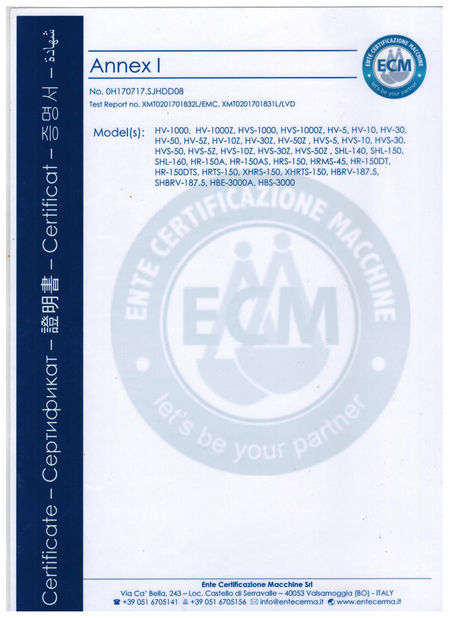
Chiny Dongguan Quality Control Technology Co., Ltd. Certyfikaty
Opinie klientów
Twardościomierz micro vickers z ekranem dotykowym został zainstalowany kilka tygodni temu, wszystko jest w porządku. Dzięki za rady i doskonałą obsługę.

—— Pan David Chambers

Dziękujemy za szybką dostawę, a nasz klient jest bardzo zadowolony z twardościomierza Rockwella i ma nadzieję, że wkrótce pojawi się więcej zamówień.

—— Niall Renato

Po wizycie u klienta zdecydowaliśmy się ostatecznie na zakup twardościomierza Brinella iBrin-413Z, teraz zainstalowaliśmy urządzenie u klienta,

—— Fermin Lee

Dziękuję za wcięcia (diamentstożek 120 stopni). Niedawno go otrzymaliśmyi już przetestowałem. Wgłębniki są dobretak jak oczekiwaliśmy.

—— Dalius Skinulis

Pomiary są dobre dla testera Brinella HBST-3000.

—— Sun Chul Kim

Hej, twardościomierz iVick-484ST został zainstalowany w zeszłym tygodniu i działa dobrze, dzięki za profesjonalne wsparcie.

—— Sabinian Smith

Miło mi poinformować, że instalacja twardościomierza SHB-3000C Brinella zakończyła się sukcesem. Chciałbym Ci podziękować!

—— Robbin

Im Online Czat teraz
firma Aktualności
Case Hardness Depth to ISO 2639
najnowsze wiadomości o firmie Case Hardness Depth to ISO 2639


Case Hardness Depth to ISO 2639


Case-hardened components are heat-treated steel workpieces. Here the workpiece is carburized, hardened, then tempered. This produces a hard, wear-resistant surface, while the core remains relatively soft and tough.


Determination of the case hardness depth CHD is described in the ISO 2639 standard.


Case hardening is used on non-hardenable steels. Carburizing with a carburizing medium (e.g. gas or packing into carbon granulate) at a temperature of 850-950 °C, enriches the surface layer with carbon atoms.


These diffuse from the enriched surface layer into the core. The result is a noticeably decreasing carbon profile from the surface to the core. Next the workpiece is hardened.


This produces a deliberate change and conversion of the structure in accordance with the amount of carbon in the surface layer. After hardening, the workpiece is tempered in order to increase toughness and relieve internal stress.


Case Hardness Depth Determination


  • Hardness indents are applied at precisely defined distances, see illustration. The test method to be used can be either Vickers or Knoop with a test force between 0.98 - 9.8 N.


  • The case hardness depth (CHD) is derived from the curve representing the hardness as a function of the distance from the edge of the specimen surface (edge distance) by measuring the edge distance up to a limit hardness of 550 HV or the corresponding Knoop hardness value.
     
Pub Czas : 2026-01-05 19:17:54 >> lista aktualności
Szczegóły kontaktu
Dongguan Quality Control Technology Co., Ltd.

Osoba kontaktowa: Mr. Raymond Chung

Tel: 86-13711988687

Faks: 86-769-22784276

Wyślij zapytanie bezpośrednio do nas (0 / 3000)